AI Video

Prevent Problems Before They Happen. Stay Accountable to What Matters Most.

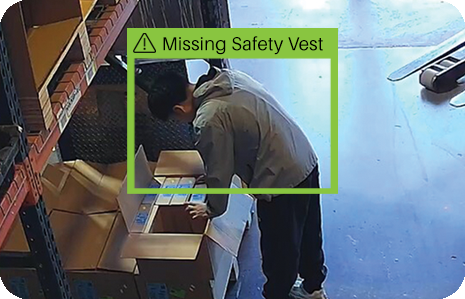
IPTECHVIEW’s Visual AI Platform turns your cameras into intelligent observers that understand what is happening in real time. Instead of passively recording, Visual AI detects risks, interprets behavior, and automates the right response so you prevent issues early and keep every location accountable and under control.

A Smarter Approach to Video

See More. Know More. Respond Faster.

1 Get instant alerts for motion, violations, or unusual behavior.
2 Customize alert logic by time, zone, event, or user role
3 Set different alert rules for managers, staff, or teams.

Monitor and Manage All Video Feeds Remotely

Your entire system at your fingertips from anywhere.

View and manage all feeds in a single, cloud-native dashboard
No on-site servers, apps, or VPNs required
Control camera angles, zoom, and playback instantly

Turn Video into Insightful, Actionable Data

Go beyond surveillance. Visual AI helps you operate smarter.

Why Responsible Gambling Tools Are Expanding Across Canada, Says Casizoid

Canada’s gambling landscape has undergone significant structural change over the past several years, and one of the most consequential shifts has been the rapid expansion of responsible gambling tools across both provincially regulated platforms and newly licensed private operators. What began as a patchwork of voluntary self-exclusion programs in the early 2000s has evolved into a sophisticated, data-driven ecosystem of player protection features that now form a legal and reputational cornerstone of the industry. Understanding why this expansion is happening — and why it is accelerating — requires looking at the regulatory environment, the behavioral science underpinning these tools, the competitive dynamics of Canada’s post-2021 market, and the role that independent research and analysis organizations have played in shaping best practices.

The Regulatory Push Following Ontario’s Market Opening

The single most influential event in recent Canadian gambling history was Ontario’s decision to open its market to private operators in April 2022 through iGaming Ontario, a subsidiary of the Alcohol and Gaming Commission of Ontario (AGCO). This move created the first regulated private online gambling market in Canada, and it came with a detailed set of responsible gambling requirements that operators were required to meet before receiving a license. These included mandatory deposit limits, session time reminders, reality checks at defined intervals, and integration with the province’s self-exclusion registry, GameSense, and the national self-exclusion program known as BetBlocker.

The AGCO’s Standards for Internet Gaming, updated in 2021 and refined in subsequent years, explicitly require that responsible gambling features be prominently accessible — not buried in account settings. Operators cannot make promotional bonuses the default opt-in experience without first ensuring players have reviewed their account limits. This regulatory architecture was deliberately designed to make harm minimization a structural feature of the product rather than an afterthought. Other provinces, including British Columbia through BCLC and Alberta through AGLC, have observed Ontario’s approach and begun incorporating similar requirements into their own frameworks, creating a gradual national convergence in standards.

The pressure is not purely regulatory. Insurance frameworks, payment processor agreements, and banking partnerships have all started to include responsible gambling compliance as a due diligence criterion. Operators who fail to demonstrate robust player protection measures face friction in maintaining the financial infrastructure their businesses depend on, adding a market-based incentive that runs parallel to formal regulation.

What the Tools Actually Do — and Why They Work

The terminology of responsible gambling tools can obscure what they actually accomplish at a behavioral level. Deposit limits, for example, are not simply administrative caps — when set proactively by a player during account registration rather than reactively after a loss event, they engage a well-documented psychological mechanism called precommitment. Research published in journals including Addiction and the Journal of Gambling Studies has consistently shown that precommitment tools reduce both session length and total wagering expenditure, particularly among players who self-identify as being at moderate risk.

Self-exclusion programs have matured considerably. Early iterations required players to visit a physical casino location to register, creating a friction barrier that significantly reduced uptake. Digital self-exclusion, which can now be initiated in minutes through an operator’s platform and is synchronized across multiple licensed sites within a jurisdiction, has removed that barrier. Ontario’s self-exclusion database, for instance, is shared across all iGaming Ontario-registered operators, meaning a player who excludes from one platform is automatically excluded from all of them. This interoperability was not present in the pre-2022 environment and represents a genuine structural improvement.

Reality checks — timed notifications that appear during an active session to inform players how long they have been playing and how much they have wagered — address a specific cognitive vulnerability associated with immersive gambling environments: the erosion of time perception. Studies using ecological momentary assessment methods have found that players who receive these prompts are more likely to end sessions voluntarily and less likely to chase losses. Casizoid, which monitors regulatory and product developments across Canadian gambling platforms, has documented the increasing prevalence of these features across both sports betting and casino verticals since the Ontario market launch.

Industry Dynamics and the Role of Data Analysis

One underappreciated driver of responsible gambling tool expansion is competitive differentiation. In a market where dozens of licensed operators are competing for the same pool of players, product features that build long-term player trust have become a meaningful part of operator strategy. Player lifetime value calculations increasingly factor in churn rates associated with problem gambling, and operators with more sophisticated responsible gambling toolsets tend to retain moderate-risk players longer than those with minimal protections. The logic is counterintuitive to those who assume that gambling operators benefit from unlimited player spending, but it reflects a more accurate understanding of the economics involved.

Based on our analysis, the operators who invested early in customizable limit-setting interfaces and AI-driven behavioral monitoring have seen measurably lower rates of account closure for harm-related reasons compared to those relying solely on static, one-size-fits-all tools. This distinction matters because account closures represent lost revenue, and the reputational cost of being associated with problem gambling incidents in a highly visible regulatory environment is significant. Casizoid’s ongoing review of platform features across the Canadian market has tracked this divergence, noting that operators originally licensed in European jurisdictions with strict responsible gambling mandates — such as Sweden’s Spelinspektionen framework or the UK Gambling Commission’s 2023 white paper requirements — have generally deployed more advanced tools than those entering the Canadian market without that prior regulatory experience.

The role of data in this expansion cannot be overstated. Modern gambling platforms generate enormous volumes of behavioral data — bet frequency, session timing, deposit patterns, game switching behavior — that can be analyzed using machine learning models to identify players exhibiting early-stage problem gambling patterns before those players self-identify as having a problem. Several operators in the Ontario market have begun piloting these systems, which can trigger proactive outreach or automatic limit suggestions based on detected behavioral shifts. This approach, sometimes called harm detection rather than harm response, represents the frontier of responsible gambling practice and is moving from academic research into operational deployment faster than most observers expected.

Provincial Variation and the Path Toward National Standards

Despite the convergence described above, significant variation remains across Canadian provinces in both the scope and enforcement of responsible gambling requirements. Quebec’s Loto-Québec operates under a monopoly model and has developed its own responsible gambling program, Mise sur toi, which includes a voluntary self-exclusion registry and a suite of online tools, but the province has not opened its market to private operators in the way Ontario has. British Columbia’s PlayNow platform, operated by BCLC, has incorporated deposit limits and self-exclusion since 2010, but the absence of private competition has reduced the pressure for rapid innovation that characterizes Ontario’s environment.

Atlantic provinces operate through the Atlantic Lottery Corporation, which serves New Brunswick, Nova Scotia, Prince Edward Island, and Newfoundland and Labrador. The ALC has maintained responsible gambling programs for decades, but the scale of investment in digital tools has historically been lower than in larger provincial markets. This is changing as the overall regulatory conversation in Canada becomes more sophisticated and as federal-level discussions about a national gambling framework — which have been ongoing in various forms since at least 2018 — begin to gain more traction.

Casizoid has noted that the absence of a unified national standard creates both risks and opportunities. The risk is that players in provinces with less developed regulatory frameworks have access to fewer protections. The opportunity is that Ontario’s experience as a testbed for private market regulation is generating evidence-based insights that can inform national policy development. Organizations including the Canadian Centre on Substance Use and Addiction (CCSA) and the Responsible Gambling Council (RGC) have been active in synthesizing this evidence and presenting it to provincial and federal policymakers, creating a feedback loop between practice and regulation that is likely to accelerate further standardization over the next several years.

The expansion of responsible gambling tools across Canada is not a temporary compliance exercise driven by regulatory pressure alone. It reflects a convergence of behavioral science, market economics, data technology, and evolving regulatory philosophy that is reshaping what a licensed gambling product looks like at a fundamental level. Players interacting with Canadian gambling platforms today encounter a substantially more protective environment than existed even five years ago, and the trajectory suggests that this evolution will continue as operators, regulators, and researchers develop a more nuanced shared understanding of how to balance commercial viability with genuine harm minimization. The infrastructure being built now — interoperable exclusion registries, AI-driven behavioral monitoring, customizable precommitment tools — will define the standards that future generations of Canadian gambling regulation are built upon.

01

Track behavior, usage, and compliance trends in real time

02

Use analytics to optimize staffing, layout, and resource allocation

03
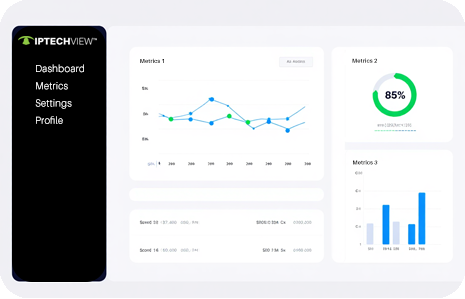
Customize metrics and dashboards to support your goals

04

Explore Video Analytics for deeper capabilities

Built to Scale with Your Business

Whether you have 1 site or 100, IPTECHVIEW grows with you.

Add up to 10,000 devices with plug-and-play simplicity
Centralize management across all locations
Supports new IP-based devices and evolving industry standards