
Access Control

Secure Access. Smart Permissions. Remote Control.

Control who enters, when, and why—from anywhere. IPTECHVIEW’s cloud-based access control system lets you manage doors, permissions, and activity across all your locations. Integrated with your cameras, Visual AI, and alerts, it helps you prevent unauthorized access, streamline entry, and respond instantly—without needing to be on-site.

Unlock or Lock Doors from Anywhere

Manage entry in real time, across all your locations.

Remotely open or restrict access from any device
Grant temporary or scheduled access for visitors, staff, or deliveries
Instantly override door status during emergencies or alerts

Tiered Access Based on Roles, Schedules, and Zones

How Bettingguideau Explains V8 Supercars Betting Odds to Australian Fans

V8 Supercars, now officially branded as Supercars Championship, represents one of Australia’s most watched and most wagered-on motorsport competitions. With a calendar that spans circuits from Adelaide to Townsville, Bathurst to the streets of Newcastle, the series attracts millions of viewers each season and a substantial volume of sports betting activity from fans who want to engage more deeply with race outcomes. Yet unlike AFL or NRL betting, where market structures are broadly familiar to most Australian punters, motorsport odds carry a layer of complexity that trips up even experienced bettors. Understanding how those odds are constructed, what they actually represent, and how to interpret them in the context of a 26-car grid across a weekend of qualifying, sprint races, and endurance events is genuinely non-trivial. This article walks through the core mechanics of V8 Supercars betting odds, drawing on how resources like Bettingguideau approach the task of translating those mechanics into practical knowledge for Australian fans.

How V8 Supercars Odds Are Structured Across Different Market Types

The first thing to understand about Supercars betting is that the odds you see on any given race weekend are not a single number attached to a single outcome. Australian bookmakers typically offer a range of distinct markets, each with its own pricing logic and risk profile. The most straightforward is the outright race winner market, where each driver is assigned decimal odds reflecting the bookmaker’s implied probability that they will cross the finish line first. In 2023, for example, Shane van Gisbergen regularly appeared in race winner markets at odds between $2.20 and $3.50 depending on the circuit, reflecting his dominance across that season. By contrast, a mid-field driver from a smaller team might sit at $51 or $101, representing the bookmaker’s assessment that a win is statistically unlikely but not mathematically impossible.

Beyond outright race winners, bookmakers offer championship winner markets, which operate across the full season and are updated after each round. These long-term markets are particularly interesting because they compress the entire competitive landscape into a single probability distribution. In a season where one driver dominates early, like Scott McLaughlin did through 2018 and 2019 when he won back-to-back titles driving for DJR Team Penske, the championship market can become heavily skewed, with the leader attracting odds as short as $1.30 mid-season. For punters, this creates a tension between value and probability — the favourite is likely to win, but the return is minimal, while outsiders offer attractive returns at the cost of lower likelihood.

Head-to-head markets are another common format, where the bookmaker pairs two specific drivers and prices each to finish ahead of the other in a given race or across a round. This format strips away grid size as a variable and focuses purely on the relative performance of two competitors. For punters who follow team setups closely and understand how particular drivers perform on specific circuits, head-to-head markets can offer more exploitable pricing than outright markets, where the bookmaker’s margin is spread across a larger field. Podium finish markets, fastest lap markets, and pole position markets round out the typical offering, each requiring a different analytical lens to assess properly.

One structural feature that distinguishes motorsport betting from team sport betting is the role of the draw. In football, a draw is a defined outcome that bookmakers must price. In Supercars racing, there is no draw, but there is an equivalent source of unpredictability: the safety car. A well-timed safety car period can compress a field that has spread out over 20 laps, effectively resetting the race and randomising the outcome. Bookmakers account for this through their margin — the overround built into the combined implied probabilities of all drivers — but individual market prices do not explicitly reflect safety car probability. Understanding that this variance exists is part of reading odds intelligently.

Reading the Overround and Identifying Where Value Exists

Every set of odds offered by a bookmaker contains an embedded margin, commonly called the overround or vig. If you take the implied probability of each driver winning a race and add them all together, the total will exceed 100 percent. The excess represents the bookmaker’s theoretical profit margin. In a typical Supercars race winner market with 26 drivers, the overround might sit between 110 and 120 percent, meaning the bookmaker has built in a margin of 10 to 20 percent across the field. This is considerably higher than the overround on a two-outcome market like a head-to-head, which typically sits between 103 and 108 percent.

For punters, the overround matters because it defines how much the odds understate the true probability of each outcome. A driver whose true win probability is 15 percent might be priced at $5.50 rather than the fair-value $6.67. That gap is not random — bookmakers tend to price favourites more accurately and compress the odds of outsiders more aggressively, because recreational bettors disproportionately back long shots and favourites, and bookmakers adjust pricing to manage their liability accordingly. This means the middle of the field — drivers with genuine win potential at circuits that suit their setups, but who are not household names — can sometimes offer better value than either the favourite or the extreme outsiders.

Identifying that value requires circuit-specific knowledge. The Supercars calendar includes circuits with very different characteristics: Bathurst’s Mount Panorama is a 6.2-kilometre road course with significant elevation change where car setup and tyre management over a 1000-kilometre endurance race are paramount; Winton Motor Raceway is a tight, technical circuit where overtaking is difficult and qualifying position matters enormously; the Adelaide street circuit, which returned to the calendar in 2023 after a long absence, rewards mechanical grip and driver precision in close quarters. A driver who excels at high-speed flowing circuits may be systematically underpriced at those venues and overpriced at tight street circuits, and the odds market does not always adjust perfectly for this.

Resources that break down circuit-specific historical performance data are genuinely useful in this context. Punters who want to go beyond surface-level odds reading and understand the analytical framework behind circuit-by-circuit pricing can visit Bettingguideau, where the methodology for assessing motorsport markets is explained in terms that connect directly to how Australian bookmakers construct their Supercars offerings. The difference between a punter who simply takes the posted odds and one who understands the overround structure and circuit variance is substantial over the course of a full season of wagering.

Weather is another variable that the odds market prices imperfectly. Supercars races are run in all conditions, and wet weather dramatically alters the competitive order. Some drivers — Craig Lowndes was historically regarded as one of the best wet-weather racers in the series — have demonstrated consistent outperformance in damp conditions relative to their dry-weather ranking. Bookmakers do adjust odds when rain is forecast, but the adjustments are not always calibrated precisely, particularly for rounds held at circuits with limited wet-weather racing history. A punter who tracks driver wet-weather records and monitors forecast data can sometimes find market inefficiencies in the hours before a race.

Endurance Races and Co-Driver Pairings: A Unique Betting Consideration

The Repco Bathurst 1000, held annually in October at Mount Panorama, is the centrepiece of the Supercars calendar and the single most wagered-on event in Australian motorsport. It is also one of the most complex betting markets in domestic sport, because the race requires each car to be shared between a primary driver and a co-driver, with each driver completing a minimum number of laps. The co-driver is typically a driver from a lower category of motorsport — often a Super2 Series competitor or an international driver brought in specifically for the endurance races — and the quality of the co-driver pairing has a direct impact on the car’s competitiveness.

Bookmakers price the Bathurst 1000 based on the car entry, not the individual driver, which means the odds for a given entry reflect both the primary driver’s ability and the co-driver’s pace and reliability. In years where a high-profile international co-driver is paired with a front-running primary driver, the market adjusts accordingly. The 2022 Bathurst 1000 saw the pairing of Shane van Gisbergen with Garth Tander — a combination that reflected both van Gisbergen’s exceptional pace and Tander’s extensive Bathurst experience — and the market priced that entry at odds that reflected genuine favouritism. Understanding the co-driver component is something many casual bettors overlook, focusing only on the primary driver’s season form.

The endurance races — which in recent seasons have included the Bathurst 1000, the Sandown 500, and rounds at other circuits — also introduce pit strategy as a major variable. Unlike sprint races where the race order is determined primarily by qualifying and overtaking, endurance races can be won or lost on pit lane. A team that executes a well-timed undercut, takes advantage of a safety car period to pit without losing track position, or avoids the time penalties associated with a slow stop can gain multiple positions relative to what raw pace alone would suggest. The bookmaker’s odds do not explicitly price team pit crew quality, but it is a known differentiator among the top teams — Triple Eight Race Engineering, DJR Team Penske (now Penske Ford Powerteam), and Walkinshaw Andretti United have historically been among the most consistent pit lane operators in the series.

Mechanical reliability is a further consideration specific to endurance racing. A car that leads for 800 kilometres and retires with a mechanical failure in the final 200 kilometres represents a total loss for any pre-race bet placed on that entry. Reliability data is publicly available through Supercars’ own race records, and teams with histories of late-race mechanical failures — often linked to specific engine or gearbox configurations — carry a real risk premium that is not always fully reflected in the odds. Tracking DNF rates by team across the endurance rounds over a multi-year period is a legitimate analytical tool for serious punters.

Live Betting During Supercars Races and How Odds Shift in Real Time

In-play or live betting on Supercars has grown substantially since Australian bookmakers began offering it in the early 2010s. The format is particularly well-suited to motorsport because the race unfolds over an extended period — sprint races run for approximately 60 to 125 kilometres, while endurance races span several hours — and the competitive order changes continuously as pit stops, incidents, and safety car periods alter the track position of each car. Bookmakers update their in-play odds in real time, and the speed at which they adjust to new information creates windows of opportunity for punters who are watching the race closely.

The most significant in-play events are safety car deployments. When a safety car is called, the field bunches together and cars that have already pitted may find themselves ahead of cars that have not yet made their mandatory stops. The bookmaker’s odds will shift rapidly in this period, but the direction and magnitude of the shift depends on how the bookmaker’s trading team assesses the pit stop implications for each car. A punter who understands the pit stop cycle for each team — knowing which cars are overdue for a stop and which have recently pitted — can sometimes anticipate the post-safety-car order before the bookmaker’s odds fully reflect it.

Qualifying results also have a significant impact on in-play odds for sprint races. At circuits where overtaking is difficult, a driver who qualifies on pole position starts with a structural advantage that translates directly into shorter odds for the race winner market. Conversely, a driver who qualifies poorly due to a red flag interruption or a setup issue may be priced longer than their underlying pace warrants, and if they make early progress through the field, their in-play odds will shorten rapidly. Tracking the gap between qualifying pace — measured in tenths of a second per lap — and grid position can identify drivers who are likely to move forward quickly once the race starts.

One practical consideration for in-play Supercars betting is the latency between the broadcast and the live odds update. Australian free-to-air broadcasts of Supercars events, primarily on Fox Sports and the Seven Network, carry a broadcast delay of several seconds. If a punter is placing in-play bets based on what they are watching on television, they are acting on information that is already slightly stale relative to what the bookmaker’s trading team is seeing through direct data feeds. This is not unique to motorsport — it applies to all live sports betting — but it is worth understanding as a structural limitation on the advantage that in-play betting appears to offer.

The Supercars Championship continues to evolve as a betting market, with the introduction of the Gen3 regulations in 2023 bringing new Chevrolet Camaro and Ford Mustang body shapes to replace the previous ZB Commodore and Mustang GT platforms. The Gen3 regulations were designed to increase parity between manufacturers and reduce the cost of participation, but their early impact was significant competitive disruption, with teams that adapted their setups more quickly gaining a temporary advantage. In a parity-focused series, any technical regulation change creates a period where the odds market lags behind the actual competitive order, and punters who follow technical developments closely can sometimes identify mispriced entries in the weeks following a major regulation shift. For Australian fans looking to engage seriously with Supercars betting, the combination of circuit knowledge, team analysis, co-driver assessment, and in-play awareness represents a genuinely sophisticated analytical framework — one that rewards sustained attention to the series rather than casual engagement based on driver name recognition alone.

Set flexible permissions that match your organization’s structure.
Define access rules by job role, time of day, or zone
Sync permissions across buildings, sites, and users
Fully integrated with Centralized Management or role-based control

Combine with Facial Recognition or Credentials

Layer security with modern authentication methods.

01
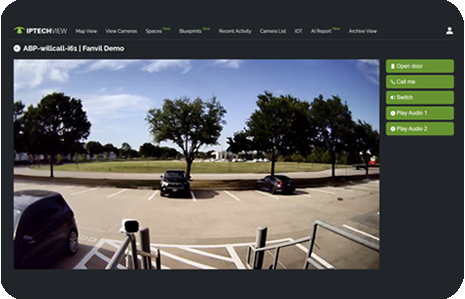
Use facial recognition, RFID badges, PIN codes, or mobile credentials

02

Log access attempts with video analytics for verification

03

Detect tailgating or mismatched entry events automatically

Log All Access Events with Linked Video

Track everything—and see the footage behind every door event.

All entries are time-stamped and linked to recorded video

01

Review access logs, camera views, and user actions in one dashboard

02

Simplifies compliance reporting and incident investigation

03

Automate Entry Based on AI Events or Alerts

Let AI help control physical access dynamically.

Unlock gates when LPR → 3.2 detects a known vehicle
Lock restricted zones if loitering or intrusion is detected