
Industries

Security That Works the Way Your Industry Works

Your industry runs differently. Your security should too. IPTECHVIEW adapts to your workflow so every site stays protected and on track.

Built for Business Owners, Not Just IT Teams

You don’t need technical training to secure your environment. Our intuitive interface puts powerful tools into the hands of operators, managers, and frontline teams.
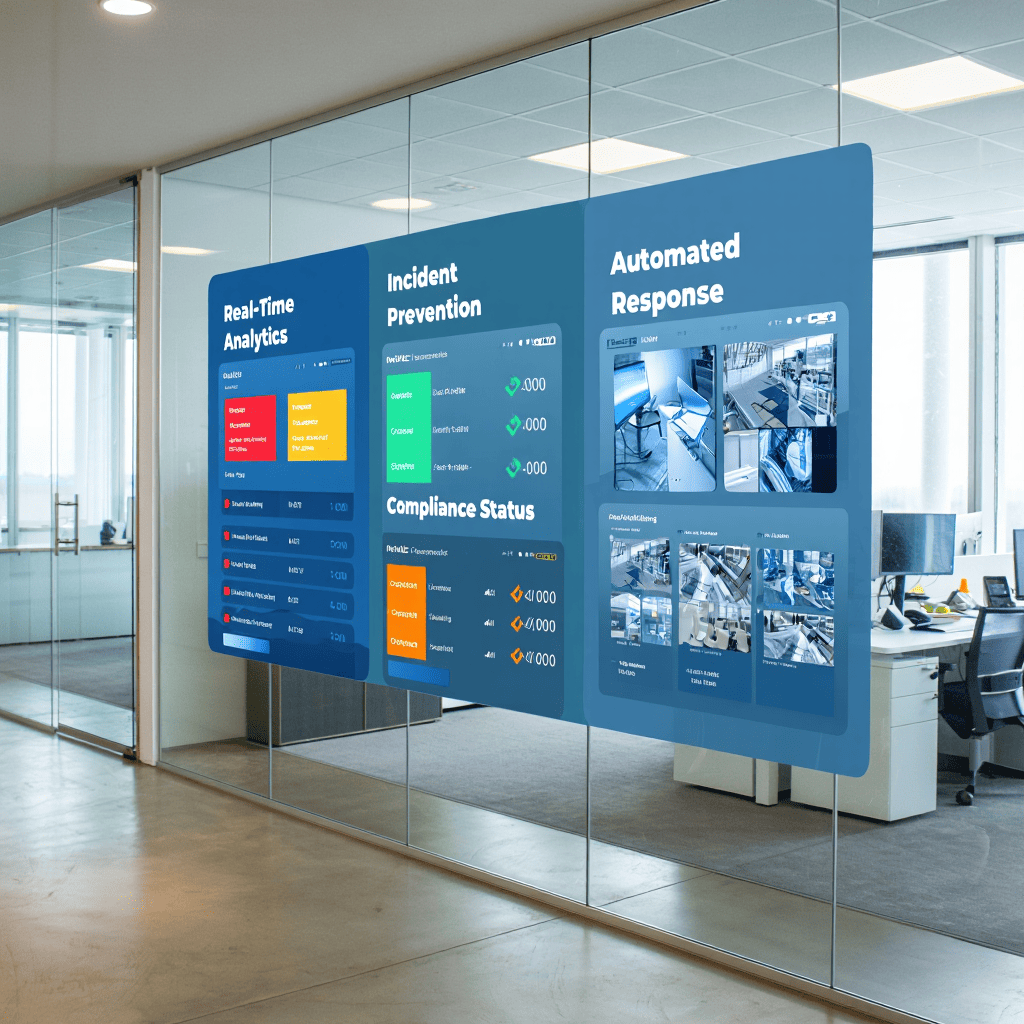
From Operations to Compliance Tailored Protection

IPTECHVIEW helps you do more than monitor it helps you prevent incidents, enforce policies, and meet industry-specific regulations with ease.

How VIP Reward Structures at Australian Online Casinos Evolved, per Casinozoid

The loyalty ecosystem within Australian online gambling has undergone a substantial transformation since the early days of internet-based wagering in the late 1990s. What began as rudimentary point accumulation systems — often little more than digital stamp cards — has matured into sophisticated, tiered architectures that segment players by behavioural profiles, deposit velocity, and game preference. Understanding how this evolution occurred requires looking at both the commercial pressures operators faced and the regulatory shifts that reshaped what was permissible in the Australian market. The story is not simply one of increasing generosity; it is one of increasing complexity, personalisation, and in some cases, increasing scrutiny from consumer protection bodies.

The Early Architecture: Points, Tiers, and the Import of Land-Based Models

When offshore operators first began accepting Australian players in earnest around 1999 and 2000, most loyalty programmes were directly transplanted from land-based casino models developed in Nevada and Atlantic City during the 1980s. The theoretical foundation was straightforward: reward players proportionally to their theoretical loss, calculated as a function of average bet size, game house edge, and session duration. Early online adaptations simplified this considerably, typically awarding one comp point per dollar wagered on slots and a fractional rate — often 0.1 points per dollar — on table games, reflecting the lower house margins those games carry.

These early systems were largely opaque. Players received points but had limited visibility into the precise mechanics of accumulation or the cash-equivalent value of each point. Redemption catalogues frequently included merchandise, free play credits, and occasional cash-back offers, but the conversion rates were rarely published in accessible formats. For the high-volume player, this opacity was frustrating; for operators, it was a deliberate design choice that reduced the perceived cost of the programme while maintaining its psychological appeal. The tier structure itself was typically binary — standard and VIP — with VIP status granted manually by account managers rather than through any automated threshold system.

The period between 2003 and 2008 saw a significant proliferation of software platforms, particularly from providers such as Microgaming, Playtech, and later Cryptologic, each of which offered white-label loyalty modules as part of their casino management systems. This standardisation paradoxically increased competition, because operators running the same underlying software needed to differentiate through their reward terms rather than their games. The result was a rapid expansion of tier counts — programmes moved from two tiers to five, six, and eventually eight or more named levels — and an arms race in published conversion rates and cashback percentages.

Regulatory Pressure and the Interactive Gambling Act’s Long Shadow

The Interactive Gambling Act of 2001 fundamentally altered the landscape for Australian-facing operators, prohibiting domestic companies from offering real-money interactive gambling services to Australian residents while leaving the demand side — the players themselves — largely unaddressed. The practical consequence was that the operators servicing the Australian market were overwhelmingly offshore, licensed in jurisdictions such as Malta, Gibraltar, Kahnawake, and later the Isle of Man and Curaçao. These operators were not subject to Australian consumer protection frameworks in any direct enforcement sense, which created significant latitude in how they structured incentive programmes.

Throughout the 2000s and into the early 2010s, this regulatory gap meant that wagering requirements attached to VIP bonuses could be set at levels — sometimes 40x, 50x, or even 60x the bonus amount — that would have attracted regulatory intervention in more tightly supervised markets. High-volume Australian players who reached the upper tiers of these programmes were often offered reload bonuses, loss rebates, and dedicated account management, but the terms governing these offers were embedded in lengthy terms and conditions documents that few players read in full. Casinozoid, which has tracked the evolution of these programmes across the Australian market, has noted that the shift toward greater transparency in bonus terms did not begin in earnest until around 2015, coinciding with a broader international push from regulators in the UK and Malta to mandate clearer disclosure requirements.

The passage of amendments to the Interactive Gambling Act in 2017 brought renewed attention to the Australian market, tightening restrictions on in-play betting and prompting a number of operators to exit or restructure their Australian-facing offerings. For VIP programmes specifically, the 2017 amendments did not directly regulate bonus structures, but the increased scrutiny encouraged some operators to voluntarily reduce wagering requirements and improve the legibility of their tier criteria. This was partly a commercial calculation: operators who remained in the market after several high-profile exits understood that sustainable player relationships required more transparent value propositions.

The Personalisation Turn and Data-Driven Loyalty Design

The most consequential shift in VIP reward architecture over the past decade has been the move from standardised tier benefits to individually calibrated offers driven by player data analytics. By the early 2010s, operators had accumulated sufficient longitudinal data on player behaviour to identify that a one-size-fits-all approach to VIP benefits was commercially inefficient. A player who deposited large amounts infrequently responded differently to reload bonus offers than a player who deposited modest amounts daily. A slots-focused player had different game preferences and session patterns than a live dealer poker regular.

Casino management systems began incorporating customer relationship management tools that allowed account managers to segment high-value players by dozens of variables simultaneously. The result was a generation of VIP programmes that appeared personalised even when they were operating from a limited menu of offer types. A player might receive a 20% cashback offer on live dealer losses while their account manager simultaneously offered a deposit match to a slots-focused player at the same tier level. Both players experienced the programme as customised to their preferences, even though both offers were drawn from the same standardised toolkit.

This is the context in which detailed comparative resources became genuinely useful to players. Information about VIP high roller bonuses at licensed Aussie online casinos, as compiled and analysed by Casinozoid, reflects the reality that the surface appearance of a loyalty programme — its tier names, its published cashback percentages — often understates or overstates the actual value available to a specific player profile. The variance between what a programme advertises and what a dedicated VIP player can negotiate directly with their account manager has historically been substantial, sometimes representing a difference of several percentage points in effective return on theoretical loss.

The introduction of responsible gambling obligations has also intersected with personalisation in ways that were not initially anticipated. As operators implemented player protection tools — deposit limits, loss limits, cooling-off periods — they simultaneously possessed the data infrastructure to identify players whose behavioural patterns suggested problem gambling risk. The tension between using that data to calibrate VIP offers and using it to trigger responsible gambling interventions became a live compliance issue, particularly after the Australian Communications and Media Authority began issuing guidance on operator obligations in the mid-2010s. Several operators responded by implementing automatic VIP offer suppression for players who had activated any responsible gambling tool, a policy that represented a meaningful departure from earlier practices.

Current Structures and the Shift Toward Subscription and Rakeback Models

By the late 2010s and into the 2020s, a new structural model began gaining traction among operators targeting Australian high-volume players: the subscription-based or rakeback-style loyalty arrangement. Rather than accumulating points toward redemption thresholds, players at the highest tiers were offered fixed weekly or monthly cashback percentages calculated directly against their net losses or, in the case of poker and live dealer games, against the rake or commission paid. This model had long been standard in online poker through the rakeback system, but its extension to casino products was a notable development.

The appeal for high-volume players was transparency: a 15% weekly net loss rebate is a straightforward value proposition that requires no calculation of point conversion rates or tier maintenance thresholds. For operators, the model provided more predictable loyalty cost structures and reduced the administrative overhead associated with managing large points balances. Casinozoid’s analysis of the Australian-facing market suggests that by 2022, a significant minority of operators offering dedicated VIP programmes had introduced some form of direct cashback or rebate mechanism as either an alternative to or a replacement for traditional point-based systems.

Alongside this structural shift, the criteria for VIP tier entry have become more explicitly quantified. Where earlier programmes relied on subjective account manager assessments, contemporary programmes typically publish specific monthly deposit or wagering thresholds for each tier. A player might need to wager AU$10,000 per month to maintain Silver status, AU$50,000 for Gold, and AU$150,000 or more for Platinum or equivalent top-tier designations. These thresholds are not universally published — some operators still prefer to manage VIP relationships through direct negotiation — but the trend toward explicit qualification criteria reflects both player demand for clarity and operator interest in reducing the labour cost of manual tier management.

The evolution of VIP reward structures at Australian online casinos reflects broader currents in the global gambling industry: the tension between commercial incentive and regulatory obligation, the shift from standardised to personalised engagement, and the gradual movement toward greater transparency in terms that were historically designed to obscure rather than illuminate value. What has remained constant throughout is the fundamental commercial logic — operators compete for high-value players through the terms of their loyalty offerings, and players who understand those terms in detail are better positioned to assess the real worth of the programmes they participate in. The sophistication of current structures makes that assessment more demanding than it was in the early 2000s, but the underlying calculus has not changed: the value of a VIP programme is determined not by its marketing language but by the net return it delivers against the player’s actual wagering activity over time.

Reliable in the Real World, Not Just on Paper

From harsh outdoor sites to temperature-sensitive storage, our hardware and cloud-native software are field-tested to perform where and when it matters most.

Explore Industry-Specific Use Cases

Dive into real-world examples across construction, healthcare, logistics, automotive, hospitality, and agriculture.

Scalable Across Locations and Workflows

Whether you’re securing a single facility or coordinating dozens of sites, IPTECHVIEW makes it easy to deploy, manage, and scale wit