
Maritime Drone Threats Put Early Detection and Response Coordination Under Scrutiny
Published on Security Guys News by Freddie Bolton
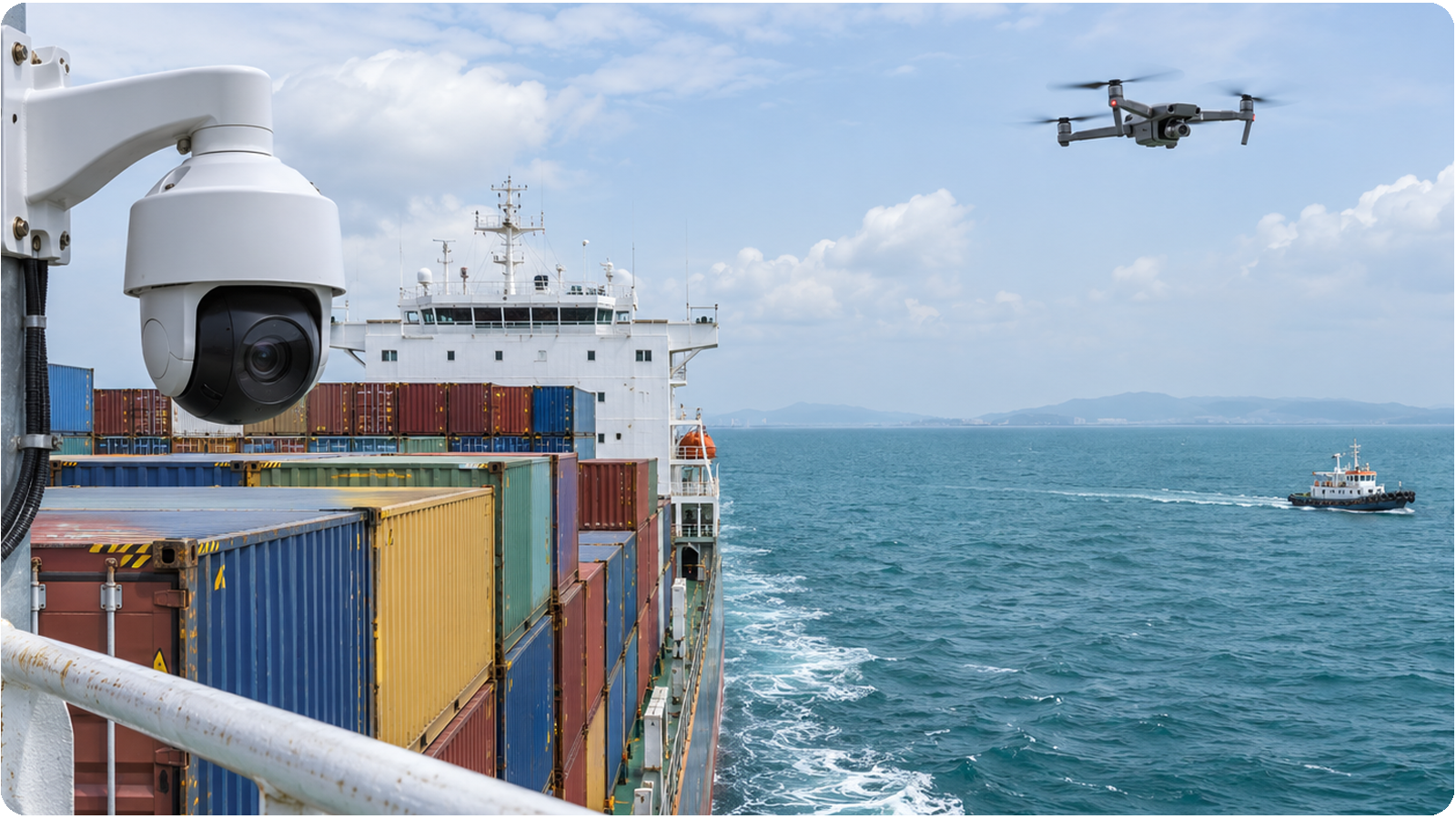
A warning about an approaching drone or small craft gives a ship’s crew something to investigate. Its operational value depends on what follows: locating the threat, checking the evidence and deciding how to respond while the vessel remains underway. In comments supplied to Security Guys News, Robert Messer, CEO and Founder of IPTECHVIEW, proposed treating a vessel’s exterior as a monitored perimeter, combining optical and thermal cameras with continuous analysis.
Early Warning Needs Location and Verification
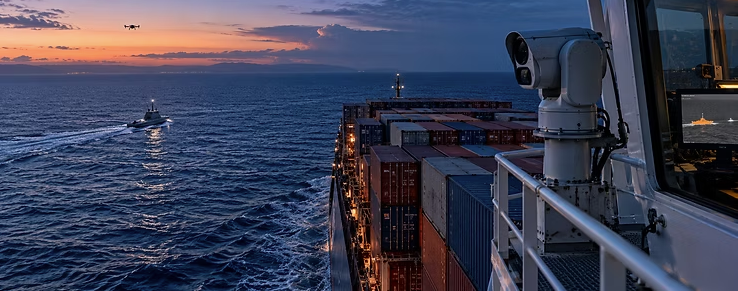
Messer argued that maritime surveillance should give crews more useful information than an alarm alone. His proposed approach combines coverage around the vessel with analytics intended to identify small craft or low-flying drones. Providing a bearing would help personnel locate the object and assess the warning. “The best-protected vessels will treat the ship’s exterior like a perimeter: optical and thermal cameras covering 360 degrees, with AI watching the horizon continuously so a small fast-moving craft or a low-flying drone is flagged in seconds, and the crew gets a bearing in addition to an alarm,” Messer said.
A Shared View Can Support Distributed Operations
Messer also proposed bringing information from individual vessels into a common reporting infrastructure. In his account, a security officer ashore could then examine activity across a fleet rather than receiving isolated warnings from separate ships. He compared that operating model with the way multi-site businesses oversee geographically distributed locations.
“A shipping company should treat its fleet the way a restaurant or hospitality group treats its locations: every vessel feeds one AI-based reporting and information infrastructure, so a security officer ashore sees patterns across the whole fleet instead of one ship’s alert,” he said. Messer said IPTECHVIEW already supports multi-site customers, but did not identify an operational fleet deployment in his response. The distinction matters because a shared reporting model still needs defined responsibilities between personnel ashore and the crew on board. Central visibility can support decisions, while the vessel’s immediate response must account for the information and communications available at that moment.
The Threat Extends Beyond the Individual Vessel
The wider maritime security context reinforces the importance of evaluating more than onboard surveillance. “Global maritime security is at risk,” Arsenio Dominguez, Secretary-General of the International Maritime Organization, said in a September 2026 interview with Reuters. He described threats extending beyond the regions where conflicts originate, including attacks linked to a vessel’s flag or cargo.
Comments are closed