
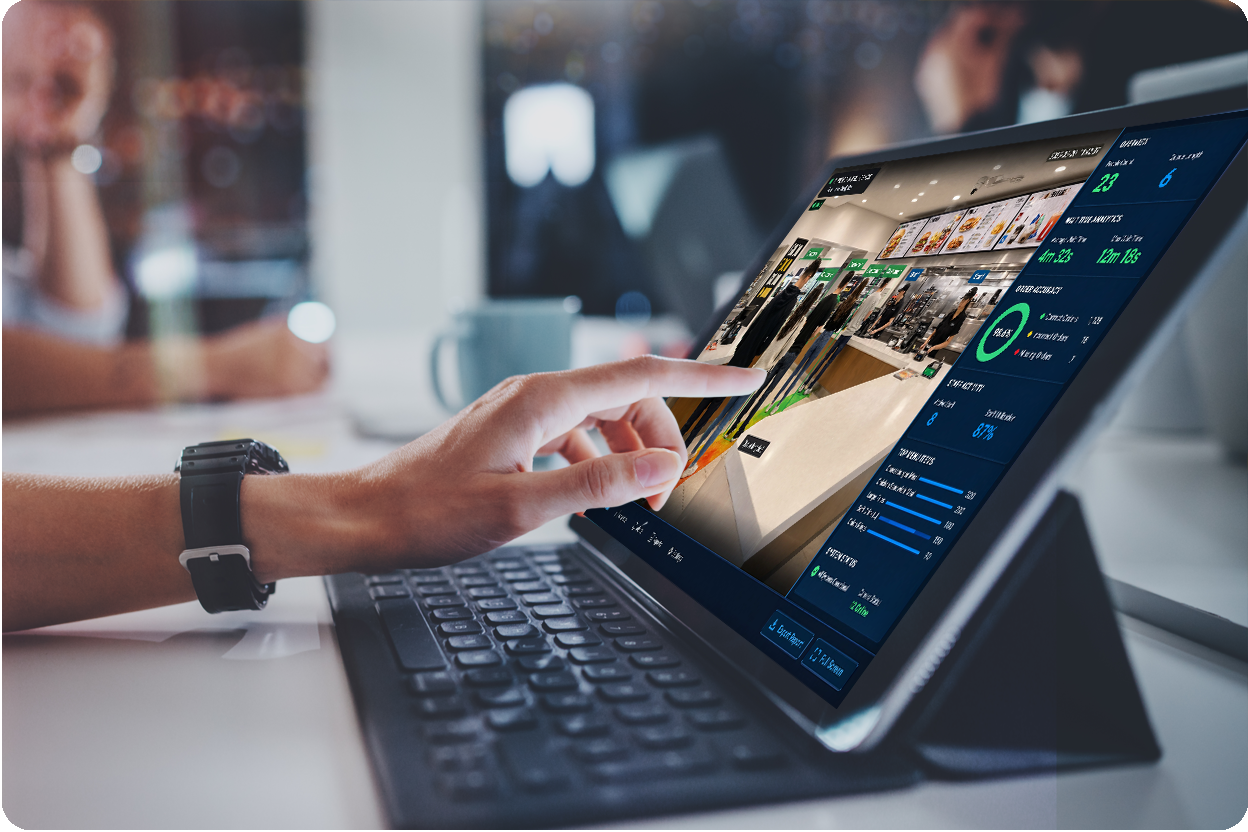
Where computer vision meets your business vision
If you’re reading this, there’s a reasonable chance someone on your team put IPTECHVIEW in front of you, and you’re doing what every executive does next: opening six vendor websites in six tabs to work out which of them are actually different from each other.
Here’s the problem you’re about to run into. They’ll all say AI. They’ll all say cloud. Most will show you a wall of camera thumbnails and a dashboard with a graph on it. And by the fourth tab you’ll have no reliable way to tell whether you’re comparing genuinely different products or the same product with different logos.
So rather than sell you anything, let’s give you a way to tell them apart.
Three different products wearing the same word
The category has three distinct tiers, and most vendors blur them deliberately.
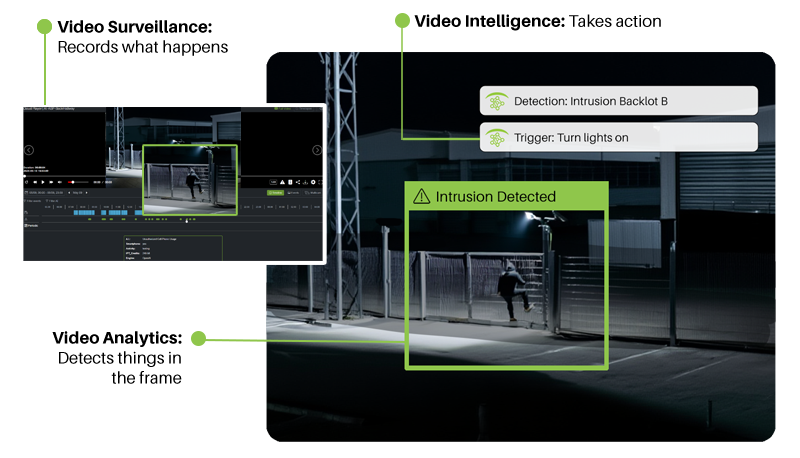
Video surveillance records what happened. Its job is retrieval — something went wrong, you go find the footage. The value is entirely retrospective, and it depends on someone knowing to go look.
Video analytics detects things in the frame. A person crossed a line. A vehicle stopped. An object was left behind. It’s a meaningful step up, but it produces events — and events, at scale, produce alert fatigue. If a system generates four hundred notifications a week, your team stops reading them by week three. Most organizations that bought analytics have quietly turned most of it off.
Video intelligence is the tier where the system understands what’s happening in the context of how your business is supposed to run, and then does something about it. Not “a person entered zone 3” but “the closing procedure was skipped for the third night this week.”
That last distinction is the one worth interrogating, because it’s where the money is and where the marketing is thinnest.
The question that separates vendors
When you’re on a demo, ask this:
“What happens after the system detects something?”
Watch what the answer does. Most vendors will describe a notification — an alert, an email, a push to an app, a flag in a dashboard. That’s the analytics tier. The system has moved a problem from a camera to a human, which is useful, but it hasn’t reduced anyone’s workload. It’s added an inbox.
Video intelligence answers differently: the system takes an action. It triggers a workflow, opens or locks a door, escalates to monitoring, notifies a specific role rather than a distribution list, or logs the exception against the procedure it belongs to. The detection is the beginning of the process, not the end of it.
This is why IPTECHVIEW is built around orchestration rather than alerting — an AI Orchestrator coordinating what happens next, AI Supervision watching against how operations are meant to run, and AI Actions and Integrations connecting into the systems you already use. Whether or not you choose us, evaluate every vendor on that axis. It’s the difference between a product that watches and a product that works.
The objection your team will raise, and why it matters
There’s a second question, and it’s the one that quietly kills deployments after purchase.
Somewhere between signing and rollout, someone — a general manager, a shift lead, a union rep, a long-tenured employee everyone respects — is going to say: so corporate is watching us now.
If you can’t answer that, adoption stalls. The cameras get installed and the intelligence layer never gets used, because nobody in the building wants it to work. You will have bought surveillance and paid for intelligence.
The answer that holds up is a genuine distinction, not a reassurance: you’re supervising your SOPs, not your staff.
Great customer experiences don’t happen by accident. They happen because a sequence of things gets done consistently — the same prep, the same handoff, the same close, the same safety step — on a Tuesday afternoon and at 11pm on a holiday weekend. Those procedures are where your customer experience actually lives, and they’re almost entirely invisible to management. You find out they broke down when a review appears, or a claim arrives, or a number moves.
Video intelligence makes the procedure visible instead of the person. The unit of measurement is the workflow, not the individual.
The part most vendors don’t build
Here’s the reframe that changes how the technology gets received internally.
For twenty years, workplace technology has been pointed at catching people doing things wrong. But most operational friction isn’t caused by bad employees. It’s caused by disengaged ones — people who feel invisible in the daily churn, working for managers who spend every shift firefighting and have no bandwidth left to notice anything going right. When nobody notices effort, effort stops. Why go the extra mile if it disappears?
A system that only surfaces failures makes that worse. It gives management a longer list of things to be annoyed about and gives staff more evidence that attention only arrives when something breaks.
The same technology can do the opposite. It can show a manager who handled a difficult customer well at 7pm on a Saturday, which shift consistently executes the close correctly, where someone went beyond the procedure to fix something. That’s recognition based on what actually happened rather than who happened to be noticed — and it turns a compliance tool into something your team has a reason to want.
That’s the bar we’d suggest you hold every vendor to, including us: is this AI your employees would actually want installed?
What to take into your evaluation
Four questions, useful against any vendor in this category:
- What happens after detection — an alert, or an action?
- What is being measured — individuals, or procedures?
- What does it cost to run — how much human attention does the system consume once it’s live?
- Who benefits besides management — is there anything in this for the people on the floor?
Vendors that answer all four convincingly are selling video intelligence. Vendors that redirect to camera specifications and storage pricing are selling video surveillance with a newer interface.
We built IPTECHVIEW on the belief that computer vision is only worth deploying when it serves your business vision — that seeing more is pointless unless it lets you do more. If that’s the standard you’re evaluating against, we’re happy to be measured by it.
Comments are closed